 Associate Degree Nursing students check patient charts
Trinity Morris had been looking forward to Victoria College’s interdisciplinary simulation all semester. The Victoria East High School graduate is in her final semester of the Associate Degree Nursing (ADN) Program. Morris stepped into the role of Transitional Intensive Care Unit (TICU) charge nurse during an immersive exercise that brings together students from five of VC’s health career programs.
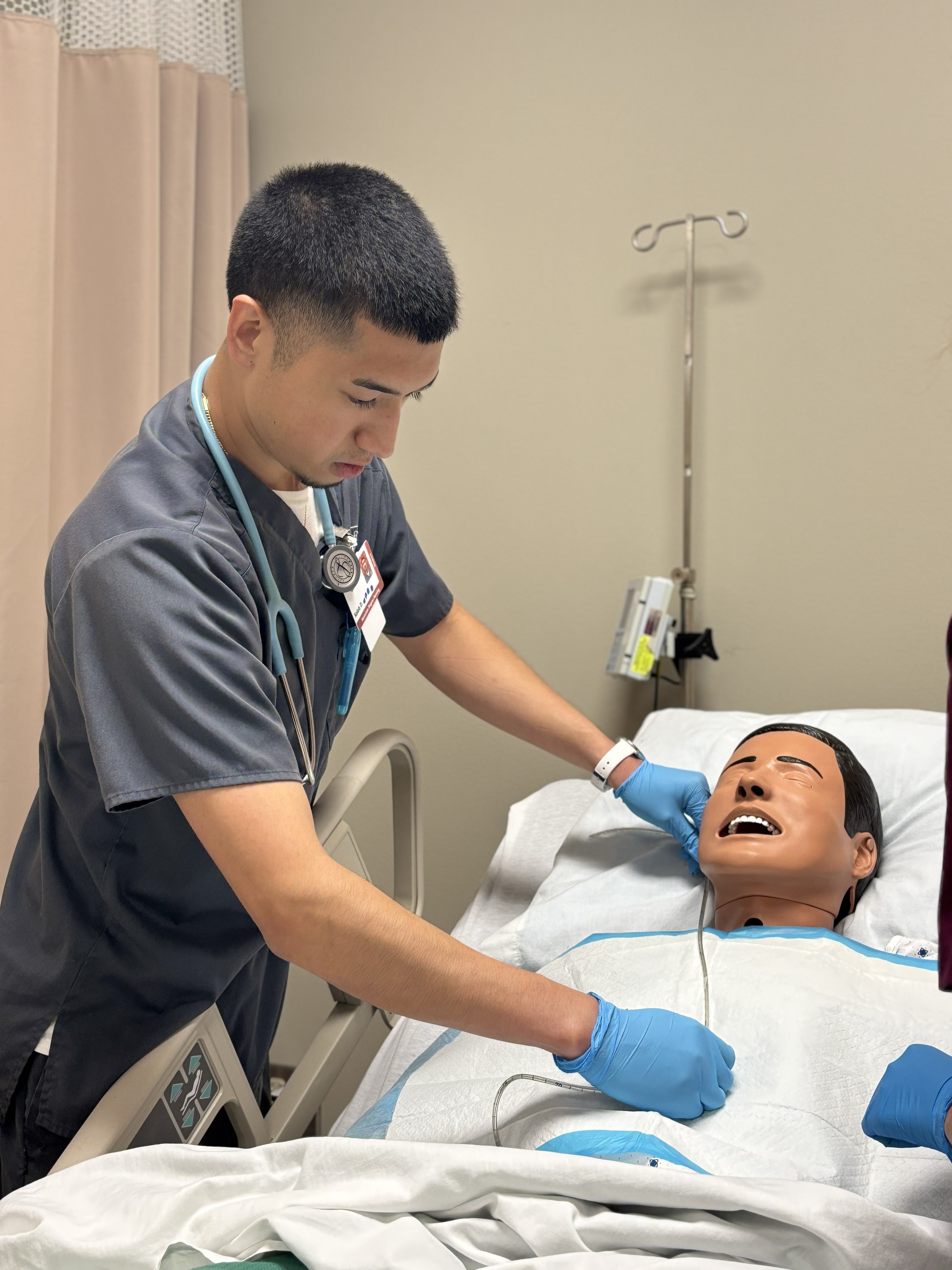
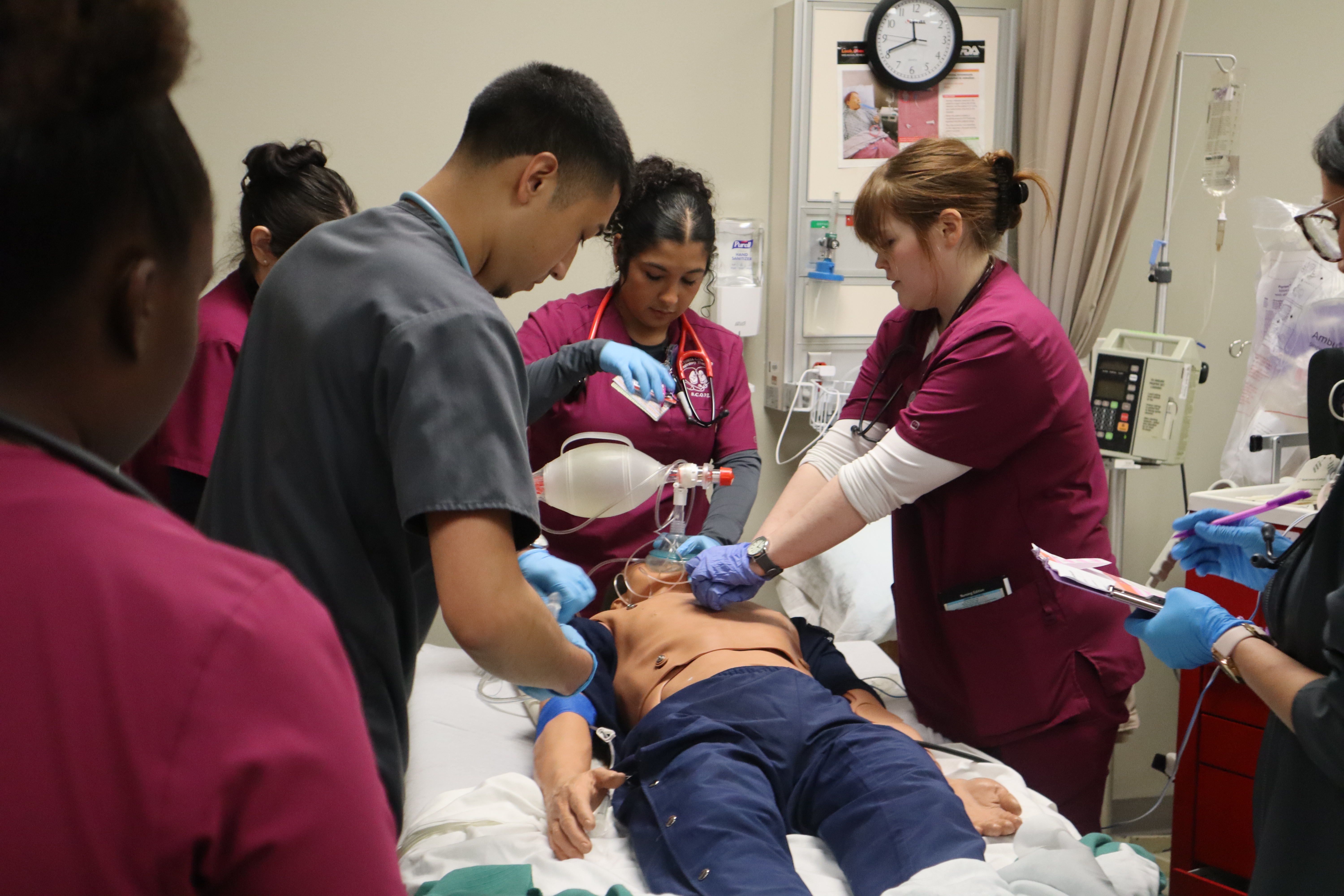
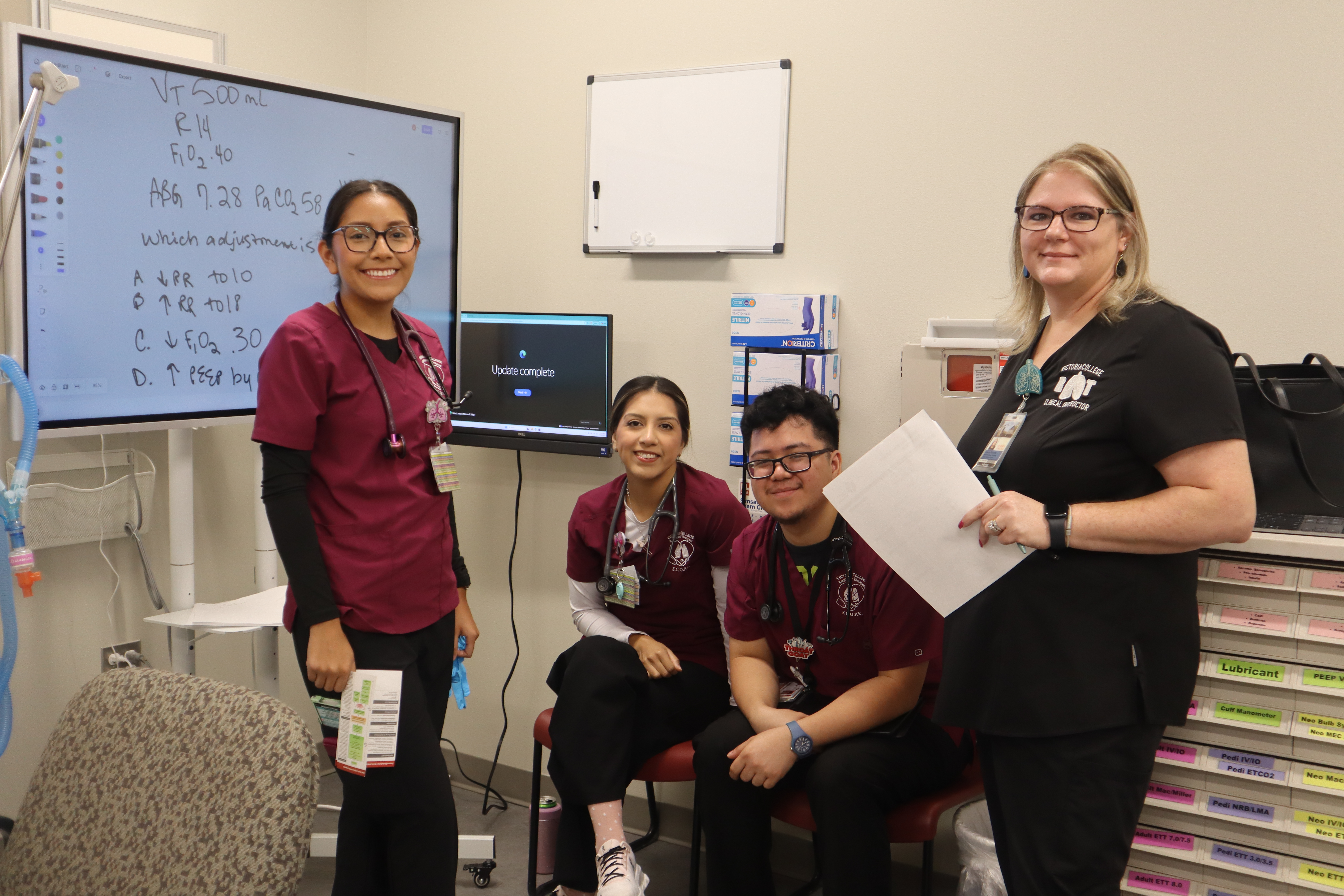
The annual simulation began with a Long-Term Acute Care (LTAC) resulting with a 9-1-1 call. Paramedic students transported a male patient (actor) experiencing chest pain to the TICU room, where Morris and her team worked quickly to stabilize him while also caring for other patients. The exercise brought together students from VC’s Advanced Emergency Medical Technician (AEMT), Vocational Nursing (VN), Associate Degree Nursing (ADN), Respiratory Care, and Physical Therapist Assistant (PTA) Programs.
Communication was critical as students collaborated to care for the volunteer patient, who had a history of heart failure and a cardiac stent. The situation took a tense turn when he collapsed and went into cardiac arrest while working with a PTA student.
“When we ran into the cardiac arrest, I turned into the code leader,” said Morris. “That meant verbalizing what happens next and delegating jobs during the code situation.”
Students quickly adapted to the changing scenario, performing chest compressions on a mannequin, administering epinephrine, and conducting an electrocardiogram (EKG) to assess cardiac activity. Respiratory Care students swiftly intubated the mannequin to ensure proper oxygen delivery and ventilation.
“I love these sim labs,” Morris said. “It really helps us see what it’s like to work with students in other programs and the level of communication and collaboration that’s required.”
The high-stakes exercise gave students the opportunity to work alongside peers they had not previously met in a fast-paced environment. With instructors observing closely, students relied on clear communication, decisive action, and teamwork to navigate an evolving emergency.
This year, the interdisciplinary simulation expanded to two locations: VC’s Allied Health Building and Health Sciences & STEM Center. Volunteers portraying the patient and the patient’s spouse added a human element to the exercise, challenging students to communicate effectively and practice providing care in high-stress situations.
By bringing together students from multiple health care programs, the simulation provides valuable experience working as a team before they enter the health care workforce.